Showing posts with label review. Show all posts

Wednesday, 28 March 2012

Animation Theatre 2: Walt Disney (1901- 1966)

Walt Disney
Walt Disney was a famous American film producer, producer, director, voice actor and animator. Famous for his ways of entertainment during the 20th century, with the help of his brother the two co-founded Walt Disney Productions, now known as The Walt Disney Company.

Disney born in December 5, 1901 in Chicago, USA Walter Disney was raised on a farm in Marceline, Missouri. Disney became interested in drawing at an early age, selling sketches at the age of seven to neighbours. Disney then went to study art and photography at McKinley High School in Chicago in 1890. Walt Disney later went to work for the military services but was rejected due to underage. However he managed to work for the Red Cross which when driving his ambulance it was covered in Disney cartoons instead of camouflage patterns. Later Disney started a small animation studio in 1922 where he and his partner made animated shorts advertising films to local cinemas. Later they did a series of cartoon sketches called Laugh- O- Grams and Alice in Cartoonland, which is a seven minute film comprising live action and animation together. Moving to Hollywood, Disney developed more on his animated cartoons and sketches and created Mickey Mouse in 1928, which also saw Disney creating his first synchronized sound animation, Steamboat Willie (1928).  By the 1930’s Disney began to develop more animated shorts to animated feature length films, notably like Flowers and trees (1932) and Silly Symphonies.
One of Disney’s works, Fantasia 2000 (1999) is a fantasy musical film which orchestrated music is played along with the film to add dynamics and emphasis. Originally made by Walt in the 1940’s, the 2000 version was revived with added shorts by his nephew, Roy. E Disney. The Sorcerer’s Apprentice features Mickey Mouse as an aspiring magician who attempts to recreate the tricks that his master does only to find that he is unable to control them. Though no dialogue is heard in the animation, however music by Paul Dukas is played in the background to exaggerate key points and actions of the film.
The Sorcerer's Apprentice
A segment from the film Pines of Rome involves a family of whales where the calf who loves jumping ends up getting lost after flying through the skies during the northern lights or supernova event. However this was not as successful as the others due to its strange story telling but was praised for its art beauty in IMAX theatres. Here Paul Fischer author for his review on Fantasia 2000 on Crankycritics states that, “The Pines of Rome sequence may be the most beautiful minutes of animation art ever seen on a big screen, and the IMAX projection at which you'll see Fantasia 2000 for the first six months of its run, only enhances the effect.”(Fischer, 2011)

Pines of Rome
Firebird Suite was another segment from the animation. Using only music to help add atmosphere into the story which depicts a Spring sprite befriending an elk after a long winter. The Sprite attempts to restore life to a forest, creating green wherever she goes until the reaches a volcano. This however accidently awakes the Firebird spirit of the volcano and in anger destroys the forest. The sprite is restored to life after being found by the elk and goes forth to restore the forest life once again. Again this segment was praised for its story telling and the art developed, as reviewer, Brian Sibley for BFI Sight and Sound states that, “The spirit of the forest soars across a snowy landscape, bringing new life in the form of a spreading carpet of flowers and greenery, only to confront the explosive force of the volcanic Firebird in a sequence of exquisite beauty and raw natural violence, images of the kind which abounded in the first Fantasia” (Sibley, 1999)
Firebird Suite
Notably Night on Bald Mountain is one of Fantasia’s famous segments. It tells the tale of how every night on Bald Mountain the midnight devil, Chernabog awakens from the tip of the mountain and begins to spread darkness over the nearest town. As he stretches his wings, ghouls, ghosts and other evil spirits arise from the shadows. The evil spirits are seen dancing and flying around the skies until they get driven back by the sound of an Angelus bell, signaling that the sun is about to rise at dawn. Though the piece was successful, it made controversy due to the segment’s darkness which Chernabog could be depicted as the Devil and the angelus bell and the light could be symbolized as Christianity with the music of Ave Maria is played in the background.  Paula Stiles, reviewer of Medieval History explains that, “Yet, the initial image of the dead streaming out of their graves in a parody of Judgment Day, the succubi dancing on the Devil's fingers, even the name of the Devil (Chernabog), are medieval concepts in origin, as is the final image at dawn of light-bearing pilgrims chasing away the demons to the amazing voice of Franz Schubert's "Ave Maria" (Hail Mary)” (Stiles, 2006).


Chernabog in Night on Bald Mountain

List of Illustrations:
JOI(2010) Daily Quote: Walt Disney's Four C's(online):
David (2010) David's review of "The Sorcerer's Apprentice" (online):
Disney, W (1940) Pines of Rome (online):
Seiley, J (2000) Fantasia 2000: The Fantasia Anthology DVD Review (online):
http://www.dvdizzy.com/fantasia.html - (accessed on 28/03/2012)
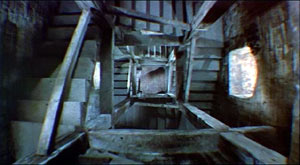
 reverse shot (unknown) A Few Great Pumpkinks IV (2009) (online):
Bibliography:
Fischer, P (2011) Fantasia 2000 (online):
Sibley, B (1999) Fantasia 2000 (online):
Stiles, P (2006) Film Review: Fantasia (online):


Saturday, 24 March 2012

Animation Theatre 2: Norman McLaren (1914-1987)


Norman McLaren on his return from China in 1950, at Unesco headquarters in Paris.
Norman McLaren
Norman McLaren (11 April 1914 – 27 January 1987) is a Scottish, Canadian animator and film director famous for his works on visual music, drawn on film animation and abstract films.

McLaren studied in Glasgow School of Fine Art; however his fascination with dance and film led him to join the school’s Kine Society. There he made his earliest film documentary, Seven Till Five (1933 and even developed more of his interest in film making and techniques. After graduating, he began working under John Grierson, there he created his film Love on the Wing (1937) which he also gained interested and began using the technique of drawing directly and scratching on film strip as he did not have access to cameras. In 1939, McLaren immigrated to the United States, where he made several abstract films whilst “dancing” along to the beat of the music, notably Stars and Stripes (1940) and Dots (1940).

One of his works, Lines Horizontal (1962) which involved lines moving around the screen whilst following to the dynamics and rhythm to the jazz music. McLaren used his technique of drawing directly onto the film for this animation and based on his previous film, Lines Vertical (1960), as described by Donald McWilliams, writer of McLaren’s biography for his site, Focus on Animation, states that, “vertical lines only were animated by engraving directly with a stylus and a ruler onto black film; in 1962, these same lines were turned optically 90o to become Lines Horizontal.” (McWilliams,  unknown). 
 
Different frames showing the horizontal lines movement

Another of his famous works, Le Merle (Blackbird) (1958) is based on a French- Canadian folk song, which describes about the creation of the white cutout blackbird on losing and regaining its body parts on a pastel coloured background.  National Film Board of Canada describes McLaren’s animated film, “Norman McLaren imparts unusual activity to an old French-Canadian nonsense song. Simple white cut-outs on pastel backgrounds, many by Evelyn Lambart, provide lively illustrations. The folksong "Mon Merle" is sung in French by the Trio Lyrique of MontrĂ©al.” (NFBC, 2010)

Le Merle (Blackbird) (1958)
 McLaren developed the technique of multiple imaging as seen notably in his ballet film, Pas De Deux (1968). Using multiple image layers onto film creates“trail” of the ballet dancer’s previous actions as she begins to fall in love, this technique helps add the emphasis on the dancer’s legs and arms movements as well as emphasizing on the idea of time as she finds her partner. Here, Fosco Lucarelli writer for the post on Socks Studios describes the work on McLaren’s piece. “The film sees two performers dancing a Pas De Deux, filmed on high contrast film stock with very stark side lighting. This is augmented by step-and-repeat printing on an optical printer. This gives the film an almost stroboscopic appearance.” (Lucarelli, 2010)


Multi imaging in Pas De Deux (1968)


List of Illustrations:


Taylor, A (1950) Norman McLaren image (online):

Rehn, D (2011) Different frames showing the horizontal lines movement (online):

Jensen, T (2006) Le Merle (Blackbird) (online):

The Movie Doc (2010) Multi imaging in Pas De Deux (1968) (online):

Bibliography:

McWillaims, D (unknown) Norman McLaren: Biography (online): http://www3.nfb.ca/animation/objanim/en/filmmakers/Norman-McLaren/biography.php - (Accessed on 21/03/2012)

NFBC (2010) Le Merle (online):

Lucarelli, R (2010) Pas De Deux by Norman McLaren (online):

Sunday, 11 March 2012

Animation Theatre 1: Winsor McCay (1869-1934)

Winsor McCay, (September 26, 1869- July 26, 1934) was an American cartoonist and animator famously known for works such as Gertie the Dinosaur and The Sinking of Lusitania.
Born in Michigan in 1867, McCay worked different jobs such as producing woodcuts for circus and theatre posters, before later moving to Ohio where he worked as an artist for Kohl and Middleton’s Vine Street Dime Museum. He’d then later begin doing chalk talks in 1906. Moving back to New York in 1903, McCay began to develop and create more of several comic strips such as Little Nemo and Dream of a Rarebit Fiend.
Winsor McCay
Whilst working on the comics, he decides to under the name of “Silas” and since then his works have become more successful. Since McCay’s comic strips show motion, he went on to become a pioneer in animation. Through this he made Gertie the Dinosaur (1914), this depicted McCay himself betting to create a living dinosaur. Producing tens of thousands frames to bring a character to life, Gertie the Dinosaur became famous for “giving a character life” as mentioned by Rovi Hal Erickson, writer for NYtime’s movies section says, “ What Gertie the Dinosaur was the first universally popular cartoon release, and also the first to exploit the possibilities of "personality" animation, rather than merely offering a series of moving images (this emphasis on personality would, of course, later become the cornerstone of Walt Disney's success)”. (Erickson, 2010)

Gertie the Dinosaur
Another one of his works, McCay introduced his short film, Little Nemo (1911) based on his characters from his comic strip. He’d then later developed his next feature film, How a mosquito operates (1912) which from both films became successful in terms of storytelling even though the story’s fantasy was dark. Dr Grob, a reviewer for drgrobsanimationreview.com explains about the storytelling used in both films, one revealing real life events and the other fictional. “Unlike McCay’s first film, ‘Little Nemo‘, a long live action intro is absent, and more important, this one tells a real story. These are both great improvements. Yet, the action is painstakingly slow, and there’s a lot of reverse animation, reusing the same drawings in reverse order.” (Grob, 2010).

The Sinking of The Lusitania
With the success of both films, McCay decides to create a film promoting to inspire America to join the 1st World War, The Sinking of the Lusitania (1918). This time, McCay aims to make a reconstruction of the events prior to the ships sinking making the animation as realistic as possible. The ship which at that time, crossed between the waters of Britain and Germany were risking destruction. However Germany showed no mercy and set off torpedoes at the innocent ship, sending thousands of innocent people to their deaths. Described by Dan North, reviewer of drnorth.wordpress.com, states that “He wants his film to stand as a dramatic reconstruction of the sinking, and he takes great care over the details of the ships massive weight being penetrated by an explosive force that almost overwhelms the image itself, but it never slides into abstraction: the aim is to stop the ship looking “cartoony”, and to convey a sense of palpable destruction.” (North, 2009)

List of Illustrations:

Hart,Reg (2011) The History of Animation- Winsor McCay (online):

Contix, (2006) Gertie il dinosauro (online):

Kininsberg, A (2007) Alan Kininsberg: Redefining Animation Documentary (online):

Bibliography:

Hal Erickson, R (2010) Gertie the Dinosaur (online):

Grob, Dr (2010) How A Mosquito Operates (online):

North, D (2009) Winsor McCay’s The Sinking of The Lusitania (online):

Friday, 2 March 2012

The Birds (1963) review


Film poster
The Birds is a 1963 suspense horror film directed by Alfred Hitchcock and stars Rod Taylor, Tippi Hendren, Jessica Tandy, Suzanne Pleshette and Veronica Cartwright. Based loosely on the 1952 story “The Birds” by Daphne du Maurier, the film revolves around a town in Bodega Bay, California where sudden unexpected bird attacks become widespread for unknown reasons.

The film starts with Melanie Daniels as she travels to Bodega Bay to visit the lawyer, Mitch Brenner with two lovebirds as a gift for him. However on the way home, Melanie gets bird attacked by a seagull. As the story continues more birds appear however, the suspense grows as the birds sit quietly and patiently on buildings, roofs or most famously, on some playground sets. The birds appear to be “listening” and waiting to attack their victims as the birds play with the victim’s fear. However there is not proper explanation as to why the birds specifically attack an innocent town, only Hitchcock makes the audience to create speculations. As described by Kim Newman, critic for Empireonline says, “A rare foray into the outright fantastic, this offers no explanation for the crisis and thus confronts its prosaic characters with the blindly irrational.” (Newman, 2008)
The famous birds on a frame
With the bird attacks recurring quite frequently, the film continues with Melanie as she beings to fall in love Mitch. However, Mitch’s mother Lydia is very clingy to her eldest son. It is also noted that there is some conflict between the mother and Melanie  as to who “claims” Mitch. It is noticeable that the mother has a grudge on Melanie because of Mitch’s feelings for her and the attention he gives her. Though strangely in the ending sequence of the film, as Melanie tries to keep her sanity and conscious stable, the mother gives a look of “I’ve got you now” as if to say, you’re in my power which coincidentally, the bird attacks begins to ease off after attacking Melanie. The bird in the film seems to appear to be battling for the next civilization against human beings. With the ending, it is unclear whether Melanie survived from her injuries or mentally stable again leaving the audience to decide as described by the Variety Staff from Variety Magazine, “Where the scenario and picture slip is in the sphere of the human element. An unnecessary elaborate romantic plot has been cooked up and then left suspended.”(Variety Staff, 1962)
The birds watching down on their prey
With the unclear plotline to how the characters end up in the ending, the audience are left with the characters rushing through the birds to the nearest hospital in San Francisco even though it is hinted that the birds have invaded the Godlen Gate bridge as well. This could possibly mean that the characters that Melanie relates or communicates to becomes “cursed” or “watched” on by the birds as described by Emanuel Levy from emanuellevy.com. He states that “ “It looks clear up ahead,” is Mitch’s last sentence in the film, indicating hopefulness for the future. The last shot shows the car moving fast into the magnificent sunrise over the crest of the hills, while the birds are sitting and waiting. The ending reaffirms the Brenners’ marginal status: leaving town, they become complete outsiders–literally” (levy, 1963)

List of Illustrations:

Vince, L (1963) Film Poster (online):
http://qwipster.net/birds.htm (accessed on 27/02/2012)

Stille, A (2012) The famous birds on a frame (online):

Pein, D.V. ( 2012) The birds watching down on their prey (online):

Bibliography:

Newman, K (2008) The Birds (online):

Variety Staff (1962) The Birds (online):

Levy, E (1963) Hitchcock’s Last Masterpiece, Part Two of Two (online):

Vertigo (1958) review

Movie Poster
Vertigo (1958) is a psychological thriller directed by Alfred Hitchcock and stars James Stewart and Kim Novak as John “Scottie” Ferguson and Judy Barton/Madeleine Elster.  The film tells the story of Scottie while, retired due to his fear of heights tries to overcome his weaknesses and solves a mystery involving a woman he loves dearly.

The film’s plot mainly revolves around the main character Jeff and his fear of heights. However halfway through the film, it focuses on the mysteries of the character or “the crime” which decreases the tension and suspense as described by film critic GA from the Timeout Magazine. He states, “Hitchcock gives the game away about halfway through the movie, and focuses on Stewart's strained psychological stability; the result inevitably involves a lessening of suspense, but allows for an altogether deeper investigation of guilt, exploitation, and obsession.” (GA, 2008)

The film also gives a twisted view of human obsession and manipulating the ones they love, as described by Roger Ebert from rogerebert.com, “It is *about* how Hitchcock used, feared and tried to control women. He is represented by Scottie (James Stewart) a man with physical and mental weaknesses (back problems, fear of heights), who falls obsessively in love with the image of a woman--and not any woman, but the quintessential Hitchcock woman.” (Ebert, 1996) This goes as far as Scottie once loving a woman he holds dearly but lost her, decides to manipulate a look-alike woman going as far changing her hairstyle, make up and the things his love wears.
Same woman Scottie loves?
Hitchcock used an effective way of camera movement in manipulating and depicting Scottie’s view of his fear of heights, or known as vertigo. This is depicted by using the camera to zoom in on the subject but at the same time the camera moves backwards. This not only focuses on the subject but the surrounding areas become wider, as mentioned by reviewer Martyn Glanville from the BBC. “A great piece of Hitchcock innovation to visually represent Scotty's vertigo: the simultaneous zoom-in and pull-back of the camera that creates a disorientating depth of field. This has been much copied by others, notably Steven Spielberg in "Jaws".”(2000)
The "Vertigo" shot
List of Illustrations:

Parker, A (2011) Movie Poster (onlie):

Hitchcockk, A (1958) (olnie):

B, E (2011) Same woman Scottie loves? (online):

Bibliography:

GA (2008) Vertigo (1958) (online):

Ebert, R. (1996) Vertigo (1958) (online):

Glanville, M.  (2000) Vertigo (1958) (online):

Tuesday, 21 February 2012

Rear Window (1954) Review

Film poster
Rear Window, directed by Alfred Hitchcock is a suspense film starring James Stewart as L. B. "Jeff" Jeffries, Grace Kelly as Lisa Fremont, Raymond Burr as Lars Thorwald and Thelma Ritter as Stella. The film is originally based on Cornell Woolrich's 1942 short story "It Had to Be Murder".
The film tells the story of Jeff being confined to a wheelchair after being involved in a photography accident and so to pass time, he looks out of his apartment window which overlooks into neighboring apartments.
Jeff’s window overlooking the other apartments.
To begin the film, visual story telling is used which the camera pans around the characters living around the apartments doing their own activities outside the hot weather. The camera then pans to Jeff’s face before panning around his room and pictures before and after his accident until it gets to his leg cast and him confined in a wheel chair. However, it is noticeable that the camera never moves away from Jeff’s apartment but is aligned to Jeff’s point of view as mentioned by reviewer, CPea from Timeout London- Film Reviews, “the camera never strays from inside Stewart's apartment, and every shot is closely aligned with his point of view.”(Cpea, 2008). However match on match editing is frequently seen between Jeff and mostly of the outside apartments.

The film is sometimes known to be a metaphor for watching films and using the “peeping tom” phrase as described by film critic Charles Taylor from Salon, ““Rear Window” can be seen as a metaphor for watching movies, but it should be said that the metaphor only goes so far. There’s a big difference between peeping at strangers and watching a movie that’s been made for the express purpose of being watched. But Hitchcock was uniquely suited to explore what Grace Kelly refers to in the film as “rear-window” ethics.” (Taylor, 2000) however, the term peeping Tom and Jeff’s “rear window” is later defined in the film. The other residents living around the apartments is also a metaphor towards the possible outcomes of the relationship between Lisa and Jeff, such as a newlywed couple moves into the apartment at the beginning of the film only to row and split up at the end.
Thorwald using a knife to “kill” his wife?
The film is successful in story plot as the only way to build suspense with a character who’s stuck in one place and only looks out of the window for “escapism” is the suspicions made by Jeff which he witness one of the residents, a salesman murders his wife. This suspicion grows as more characters become more involved like the likes of Lisa, his nurse Stella and police detective, Tom Doyle. It is shows the true nature of these characters like Lisa who appears as a woman who wouldn’t perform dare devil tricks but in the end does so as described by Vincent Canby for the New York Times, “The suspense of the film is provided by Jeff's growing suspicion that the jewelry salesman (Raymond Burr) who lives across the way has murdered and dismembered his wife. The film's comedy is provided by Lisa's showing that, when the chips are down, she's as capable of breaking-and-entering a possible murderer's apartment, scaling a wall to do so, as she is of wearing couture gowns. Jeff's delight in Lisa matches our delight in Miss Kelly.” (Canby, 1983)

Jeff using his photography camera 
List of Illustrations:


MovieGurur (2010) Film Poster (online):
http://www.movieposterdb.com/poster/a3d2fd71 - (accessed on 15/02/2012)
Malone, Sarah (2010) Jeff’s window overlooking the other apartments (online):
http://brightwalldarkroom.tumblr.com/post/434949525/rear-window-1954- (accessed on 15/02/2012)
James (2011) Thorwald using a knife to “kill” his wife? (online):
http://underthegunreview.net/2011/12/07/reasonable-remakes-rear-window/- (accessed on 15/02/2012)
aceblack1965 (2010) Jeff using his photography camera (online):
http://www.theaceblackblog.com/2012/01/movie-review-rear-window-1954.html- (accessed on 15/02/2012)
Bibliography:
CPea (2008) Rear Window (1954) (online):
http://www.timeout.com/film/reviews/76472/rear_window.html - (accessed on 15/02/2012)
Taylor, Charles (2000) Rear Window (online):
http://www.salon.com/2000/01/21/rear_window/ - (accessed on 15/02/2012)
Canby, Vincent (1983) Rear Window- Still a Joy (online):
http://www.nytimes.com/library/film/100983hitch-window-reflect.html- (accessed on 15/02/2012)

Thursday, 9 February 2012

Psycho (1960) Review


Film Poster
Psycho is a horror suspense film directed by Alfred Hitchcock. The film stars Janet Leigh and Anthony Perkins as Marion Crane and Norman Bates. The film is loosely inspired on the murder crimes and grave robberies of Ed Gein. The film tells the life and death story of Marion Crane who runs off with a large quantity of money to hide in a secluded motel where she meets the disturbed owner and manager, Norman Bates.
Set in 1960, the film was shot in black and white as Hitchcock wanted the film to be “as realistic” as possible. This included the costumes that Marion had to wear, the camera lenses which gives the view similar to a human’s view and the infamous idea of having a shot of a toilet flushing. It was also in the era of strict censorship in films. “With Psycho, Hitchcock dabbled in cinematic taboos, pushing the censorship envelope. For example, this was the first American motion picture to feature a toilet being flushed (most movies of the era didn't even acknowledge the existence of toilets). Also, Janet Leigh is shown in her underwear on more than one occasion, and, during the famous shower scene, it's possible to see hints of flesh. The script also features a man speaking the word "transvestite" - a line that survived in the film only after a Herculean struggle on Stefano's part. “ (Berardinelli, 1998) Because of this, the film was not shown in some areas until few years later until the censorship laws have lifted.
The film mostly experimented different camera angles that are seen from a human’s view. This included the change of camera lens which is more noticeable in the scene where Norman looks into the next room through the walls with holes. These included medium and close up shots and there are also at times where the camera positions itself where the prop appears to “intimidate” the character. An example of this would be the scene where Marion haves a sandwich in Norman’s office where he explains about his disturbing hobby of taxidermy on birds. The placement of the stuffed birds (especially the eagle) and the low key lighting gives of the impression that Norman is being watched-by his mother.
Stuffed Eagle and low camera angle giving the feeling that Norman's being watched
For the infamous shower scene, a total of 90 edits were made which did not include Perkins but a body double. This scene has become famous due to the quick rapid shots between Marion’s face and the knife along with sounds of stabbing flesh and the high pitched discordant staccato sounds of violins. “Psycho, however, is much more than a mere exercise in audience control. With the help of Bernard Herrmann’s jagged, strings-only score, the audience is led on a journey into the psychological abyss. Littered with Freudian symbolism, Hitchcock’s imagery is both suffocating and schizophrenic.” (Total film, 1998)The silhouette of Norman coming into the scene before stabbing Marion was also restricted information as not to reveal the true identify of Norman Bates.
The mother-possessed Norman
The strange personalities of Norman and his mother are disturbing as most of the time, it is Norman who does the speaking on “behalf” of his mother. Through the course of the film, it is revealed that Norman was in a battle of his persona and his mother’s.  This even includes the idea of Norman dressing up as his mother and wears the wig. A back story was given as to how Norman became this way and the relationship between him and his mother. “Hitchcock uses the old plea that nobody give out the ending -- "It's the only one we have." This will be abided by bere, but it must be said that the central force throughout the feature is a mother who is a homicidal maniac. This is unusual because she happens to be physically defunct, has been for some years. But she lives on in the person of her son.” (Variety, 1960) The use of editing is effectively used at the end of the film to show the mother existing in his son as overlay image of the skeletal mother's head ontop of Norman's face.
The overlay of now Mother - Norman Bates
List of Illustrations:
Gray, B (2011) Film Poster (online):
Hitchcock, A (1960) Stuffed Eagle and low camera angle giving the feeling that Norman's being watched (online):
Monsterett, Cookie (2010) The mother-possessed Norman (online):
Amber,s (2010) The overlay of now Mother - Norman Bates (online):

Bibliography:
Berardinelli, J (1998) Psycho (1960) (online):
Total Film (1998) Psycho (online):
Variety Film (1960) Psycho (online):


Tuesday, 7 February 2012

Rope (1948) Review

Movie poster
Rope is a thriller film directed by Alfred Hitchcock based on a novel of the same name written by Patrick Hamilton. The film stars John Dall as Brandon Shaw, Farley Granger as Phillip Morgan and James Stewart as Rupert Cadell. The film focuses on these two characters where they attempt to create “a perfect murder” whilst under their dinner guests’ noses. The film is notable for its use of long takes, appearing as a single continuous shot throughout the film.
(L-R) Phillip, Rupert and Brandon
The film begins by giving information to the audience which is the murder and the plans afterwards. The use of long takes adds the tension and suspense of the two characters as they try to cover their tracks throughout the whole night until one couldn’t bear it and explodes. “For apart from the tedium of waiting or someone to open that chest and discover the hidden body which the hosts have tucked away for the sake of a thrill, the unpunctuated flow of image becomes quite monotonous. And the effort of application to a story of meager range becomes intense.”(Crowther, 1948).
 Without showing a different take or change of film, the camera goes into close up of objects, mainly character’s backs until the screen goes into black out before coming out of close up again with an overlay of the previous character’s dialogue used- creating “seamless” editing. The camera also at some stages creates and uses camera angles that the audience don’t usually expect to see. An example of this would be when Mrs. Wilson walks into the kitchen through the dining table, the audience expects a close up or some sort to show detail however Hitchcock suggests that having the film taken at long distance with the chest at the edge of the frame to create tension and mystery. “However, his obsession with telling a story without resorting to the usual methods of montage, and without cutting from one shot to another, results in a film of unusual, fascinating technical facility, whose chilliness almost perfectly suits the subject.” (Canby, 1984) This was made by having the set crew move the sets and props around and placing them back silentley whilst the camera moves around.
How the camera moves around set
The idea of placing a body inside a chest whilst dining with a group of guests, including the victim’s relatives with food placed on top, as what Brandon calls this as a work of art and a masterpiece creates chilling atmosphere as well as characters who appear to be not having fun in the party as tensions begin to arise between the murderers and about David, the victim not appearing without giving notice to the party as Rupert begins to trail on them.
“The victim's scream brings us inside, and into Hitchcock's stylistic experiment. Brandon and Phillip throttle their friend and hide the body inside a living room chest and invite the dead man's friends and family to the party, with food served off the trunk-coffin, the kind of ghoulish touch that, according to Brandon, separates a "work of art" and a "masterpiece."” (Croce, 2006)
As with Hitchcock’s traditions of appearing in the films as cameos, Hitchcock appears in Rope as two cameos, one is of Hitchcock appearing as a man walking down the Manhattan street in the opening scene and the other is of his icon symbol on a red neon sign seen from the apartment window.
Hitchcock's appearence (in red neon icon)
List of illustrations:
Hitchcock, A (1948) Movie poster (online):
Snow, R (2011) (L-R) Phillip, Rupert and Brandon (online):
http://robertsnow.wordpress.com/2011/08/ - (accessed on 6/02/2012)
Snow, R (2008) How the camera moves around set (online):
Hitchcock, A (1948) Hitchcock's appearence (in red neon icon) (online):
Bibliography:
Crowther, B (1948) 'Rope': An Exercise in Suspense Directed by Alfred Hitchcock (online):
Canby, V (1984) 'Rope': A Stunt to Behold (online):
Croce, F.F (2006) Rope (online):